
Ep. 140 | What Do You Do When God Doesn't Heal You?
With JD Fitz, MD
Apple Podcasts | Spotify | YouTube
What happens to your relationship with God when the healing you're praying for never comes?
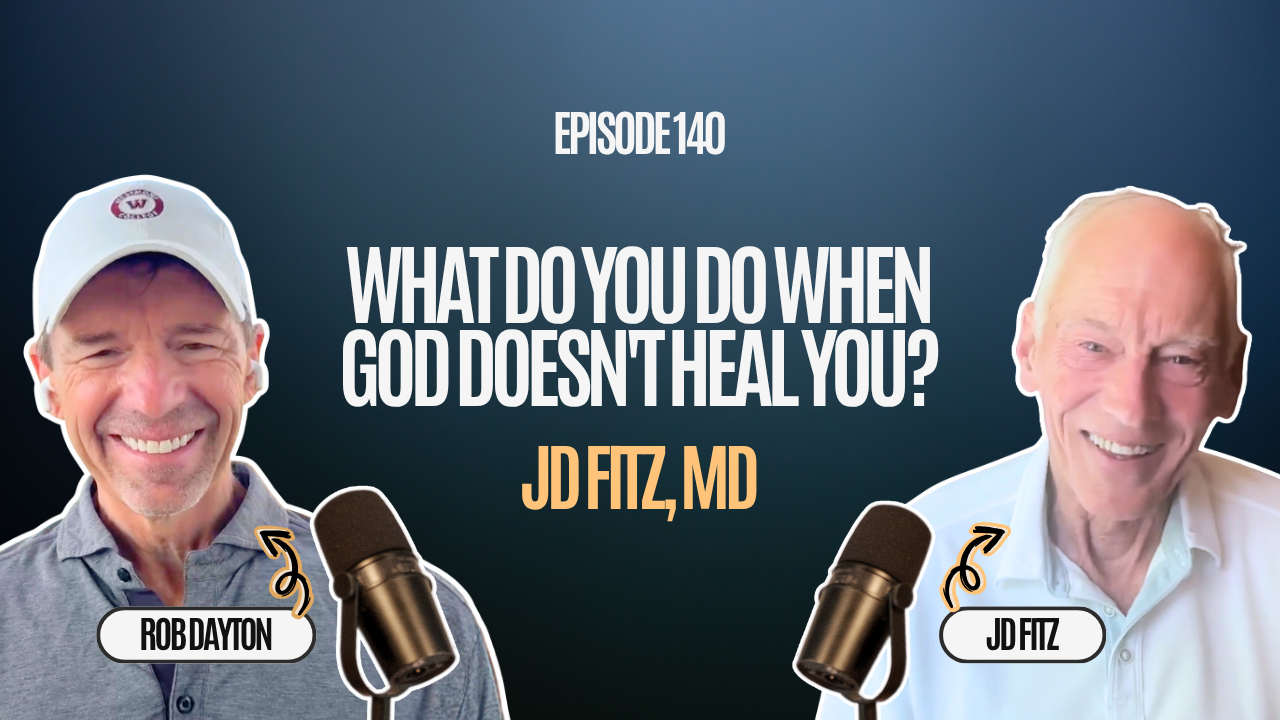
In this episode of the 100xLife Podcast, Rob Dayton talks with his brother-in-law JD Fitz, a retired physician, husband, and author of Finding Hope, about a season of suffering that started with a knee replacement and became a years-long journey through infection, amputation, failed surgeries, and the real possibility that he may never walk again.
This conversation doesn't offer easy answers. JD speaks candidly about feeling isolated from God, the anger he never quite let himself feel, the depression that followed, and the slow, costly work of surrender that eventually opened into something he didn't expect, a deepened capacity for empathy, a renewed intimacy with each member of the Trinity, and a clearer sense of purpose than he'd ever had before his suffering began.
Rob and JD trace the actual shape of that journey together, from crisis, to lament, to surrender, to a kind of purpose neither of them could have written down in advance. Along the way, they wrestle honestly with why some people are healed and others aren't, what it means to trust a Father who could heal you and doesn't, and how suffering, handled honestly, can become one of the clearest pathways into a deeper capacity to love.
You'll Hear
JD's story, from knee replacement to amputation to the ongoing possibility he may never walk again
Why he initially felt isolated from God, and what shifted that
His metaphor for healing as "God's lightning," and why not every prayer gets struck
How Romans 5 and Hebrews 5 reshaped his understanding of suffering and obedience
Why empathy, not answers, became the clearest fruit of his suffering
The moment he realized his own prosthetic leg had quietly become a kind of golden calf
Why surrender, not acceptance, is the more accurate Christian posture toward suffering
What it means to build a "values-based obituary" instead of an achievement-based one
Journal Prompts
Holy Spirit, remind me of a specific time I was suffering.
Jesus, what did you teach me in this season of suffering? And how did this make me a better lover?
From JD: In your current suffering, big or small, what are you being asked to surrender?
About JD Fitz
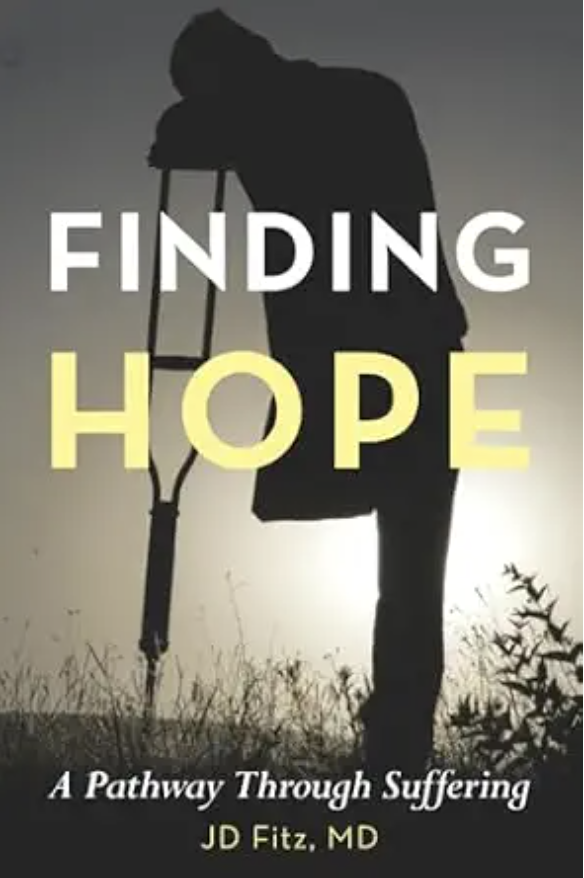
JD is Rob's brother-in-law and a retired physician who spent his career in internal medicine and hospital administration. He's the author of Finding Hope, which traces his journey through years of medical complications following a knee replacement and eventual amputation.
📘 Finding Hope by JD Fitz
Watch on YouTube
-
Rob Dayton (00:00)
Welcome to the 100X Life Podcast, where we activate people who desire to live the words of Jesus and experience the abundant life He promises. I'm your host, Rob Dayton, and I hope this podcast inspires you to put in the work of following Jesus.
Rob Dayton (00:36)
Hey 100x lifers, welcome back to the podcast. I've got a really exciting subject today. Maybe maybe less exciting for some who have suffered, but the question is: how does suffering impact our ability to follow Jesus, our ability to love? What does that look like? Before I get into it, I want to just let you know I'm coming from Catalina. Nancy and I are in Catalina.
We are on a boat with my sister and brother-in-law with the Patty and Jimmy Edwards. I've been coming to this location right here in Cherry Cove since I was probably 16. It's just a joy to be here with them. And we're headed back up to we're gonna start our reverse trip soon, back up through San Luis Obispo and San Francisco, back up to Bend.
But this is where we are today enjoying. And I've got an incredible special guest today. I was talking about my my sisters are actually older than I am. I was actually have three sisters. they moved to California with my parents from Michigan when my dad decided he would cash in his aeronautical engineer career and attend Fuller Seminary and become a pastor. And so
They moved to Pasadena from their mansion to a two-bedroom, one bath. And then, surprise, here comes Robbie. So my sisters are all older. Lee, which is JD's wife, is 13 years older than me. So it kind of it's kind of a different generation. I I always like to say I had four moms. But JD is I've got him on the podcast today. This is so this is my sister's husband. and
He is a doctor. He he had a whole career as an internal medic. And then he transferred into administration in the hospital realm. And he's been a close friend. We our families have been very close. We do we've been doing vacationing primarily in Court d'Alene for for it seems like forever. And one of the things, and I'm gonna let him tell the story, but one of the things that happened to JD that was so crazy.
Is that he went through this process of first having a knee issue or, you know, typical reconstruction of a knee, that had some issues. We had to reconstruct the knee again, and you know, it just didn't work, it didn't hold, and then he finally decided, you know what, I'm in such pain, let's just amputate just at above slightly above the knee. And this started
And that was the beginning of the story, this whole series of challenges in life that produced lots of suffering, And then he actually ended up writing a book, Finding Hope. And the reason why I want to talk to you, JD, and the the the the thing I'm so excited about this conversation and and is that in my life I feel like I have not suffered. And even if I have suffered.
I I just, you know, I'm I'm a brush it off kind of guy. Your stuff is is almost so confrontational, it's just unavoidable. There's no brushing off. You can't take James one two and say, consider it all joy, JD, when you face trials of any kind. Because this trial, this this episode in your life has been so giant that there's no way to look away. and it's taken you on this journey.
JD Fitz, welcome to the podcast.
JD Fitz (04:03)
Well thanks, Rob. you did a great job. I think the one thing I'll emphasize is how recreational and how similar my outlook was to yours, having had no really substantial suffering in my life. The suffering and you and I laughed about this the other day, the the suffering that we experienced were were was basically self-imposed in the weight rooms or the treadmills of life.
And then along comes a knee replacement with complications. and each time I had the small H hope that it would
Rob Dayton (04:35)
Mm.
JD Fitz (04:35)
this would be the you know, this would be the solution, whether it was infection treatment or repair of a quadriceps tear, it was induced in surgery.
Rob Dayton (04:45)
That w that
let's pause on that 'cause that's really interesting and I think that that's a great perspective for our conversation is what you're saying is you had more more or less than the let's say you suffered very little in your life and you're very athletic, you're you're a hiker, you're a biker, you're biking to work, even as a doctor.
you're a an amazing water skier as we did on vacation. So you have this life and then all of a sudden now you're getting into it. You have this knee complication. I think that's great because our listeners may be at a place where they, you know, were also that and haven't experienced that. Keep going.
JD Fitz (05:21)
well in in the late 2023 I was told that really my only choices were a fusion of my leg, which would make me you know, a straight leg the rest of my life, or an amputation. And I thought, well, I could work with an amputation, but I can't really work with a straight leg. So we went into it, Lee and I made an agreement that was fundamental in our attitude, which was we would never look back and regret.
the decision we made it based on w the facts at hand and what we felt was God's guidance. Although there were those that were praying for us, including yourselves, that felt pretty
Rob Dayton (05:53)
Right.
JD Fitz (05:53)
strongly that we were gonna get through this. And it just didn't work out that way. so
Rob Dayton (05:58)
And so what and so what
happened? You had you did the you you did the amputation and then and this is what I didn't say in the intro, now you have a series of events that happen that it's almost like each event is gonna
JD Fitz (06:10)
Right.
Rob Dayton (06:12)
get more discouraging.
JD Fitz (06:13)
Right. Well I what I didn't know was that my skin would react so violently to the socket. That was my first challenge. We went through lots of different kind of approaches to that. Finally I had a staph staphylococcus MRSA, not MRSA exactly, but a methylin sensitive staph infection with a big cyst and a bone infection and required a shortening. And then went from there to realizing that I I
The socket life was not going to work for me. And so I investigated another option, which is called osseointegration, where a rod is actually inserted into the femur. And that holds that would hold my lower leg. And my surgeon says he's had three complications from these procedures, and they all occurred with me. So I had
Rob Dayton (06:55)
Wow.
JD Fitz (06:55)
a massive bone infection of at the outset. I was sick as a dog and thought I was gonna die in a
Hoped it would come soon. but then it went on to that was cured. I I fell with the prosthesis on and the bone and the the titanium rod cracked inside my leg, had to be removed, another one inserted months later. that fall occurred in January of this year, now being almost September. I haven't walked since because I've been in between wound problems and I haven't had a leg.
to stand on, so they say. But I I'm scheduled now for a reconsideration of a particular type of socket next week or this week actually tomorrow at at a specialist's office. So I'm having to grapple with the fact that I may never walk again. I live on my crutches are over here.
Rob Dayton (07:42)
Yeah.
JD Fitz (07:43)
I'm in I'm in a wheelchair as we speak. I'm kind of rolling back and forth.
Rob Dayton (07:46)
Yeah, it's not it's not easy
for a guy who's super active, like you know, and and just for our listeners,
JD Fitz (07:52)
No, I
Rob Dayton (07:53)
JD's a super active guy. So my question is when, you know, you're going through this process and you're having these slowly extra degrees of it's not working out, you know, you're a believer, you've had a relationship with God, I think, most of your life. how is this impacting that conversation with God, do you think?
JD Fitz (08:11)
Right. Well, I took it personally. I'll just say.
Rob Dayton (08:14)
Right right.
JD Fitz (08:16)
here's a god who the big prayer of he can keep you from stumbling, and there I am stumbling and and losing a year of my life, another year of my life. so there was that element to it. I think I I've been influenced by Job's story, of course. and losing things and
Sometimes I think one metaphor for suffering, I've got eight or nine, but one of them is suffering is God's casino, where he makes a bet with on me with Satan that I'm gonna come through this thing. And in some part that's inspirational for me to know that I represent him. I'm my attitude reflects him to others. And so I I know that that's true. Nevertheless I know I'm human.
And I have reactions to all of this, as you say, sadness. I never really entered an anger phase because just not my personality, but I certainly became depressed as part of it and clinically depressed. I think I withdrew and became isolated. But at one moment, maybe a year after my amputation in twenty-three, I just felt the Holy Spirit
pouring words into me. And so I started writing.
Rob Dayton (09:19)
Wow.
JD Fitz (09:20)
And I wrote fast and it was really cringy when I looked back on it. But it was therapeutic. And from that I derived this this book that you mentioned, Finding Hope. And I think
Rob Dayton (09:30)
Tell me about
so tell me about the moment where you're sounds to me like isolated, almost not hearing God. Like the relationship is kind of has a an obstruction. You know, perhaps that's your severing of how describe that and then describe how it opens up to now this flow of Holy Spirit kind of meeting you in this place.
JD Fitz (09:50)
Well, I think it was a combination of a delayed grief reaction, you know, to the loss of the amputation. 'Cause I I know I went on nervous energy for quite a while, g getting through it it in the first several months. And then there was a l this I think I most identify with the lament phase. You know, how long, Lord, and all of the lamentations.
Rob Dayton (10:10)
So so it's a
so it's a crying out. It's kinda like, Look, this is happening to me. is it where are you? Is it is he there? And and he's not speaking? Like in your imagination, tell us how that feels. What does that feel like?
JD Fitz (10:24)
Yeah, that's a great question. I think that it felt isolated, it felt being ignored, it felt like I was trying here and and he wasn't sort of doing his job description in a way.
Rob Dayton (10:34)
Hmm. Right. Right. Cause he's
because he's got all this power and authority. And and and and
JD Fitz (10:39)
Yep, it's the classic yeah.
Rob Dayton (10:42)
and and I you know for me, like you know, the the first time someone got healed through my hands in like kind of a notable sense is what's what's the what's the disease where someone has like they have tremors, they're what's what is that?
JD Fitz (10:55)
Yeah. It could
be essential tremor or Parkinson's, yeah.
Rob Dayton (10:58)
Yeah, Parkinson's. And the guy got completely healed, and his wife and him were dancing around. and I've seen healing after healing after healing after healing, you know, some bigger than others. So you've got this God you know it's in the Bible can heal. So how how do you confront that with what you're going through and your relationship?
JD Fitz (11:16)
Well,
at one point I I had this thought that healing is like a a lightning bolt. It comes, it does something powerful, you're shocked by it. And in this case it's very positive. It's not frightening like a lightning bolt. But it is like lightning because I think it's it happens and it's it's out there as a marker of the power of God. but it
Just like lightning doesn't occur all the time everywhere. I think the healing issues are so complex. There's so much going on in our world. And to think that God doesn't love me because I didn't get healed is a tremendously egocentric
JD Fitz is the center of the universe and you should pay attention here, God. So
Rob Dayton (11:54)
Mm.
JD Fitz (11:54)
I think it's a it's a lesson in humility.
To accept what God gives you, much like Job needed to. And God backed him off by saying how powerful he was and and look around, I'm doing so much in this world. who do you think you are? Sort of and I I think that was that was another transition moment for me when I
Rob Dayton (12:13)
Is that
is there a decision point and what are you deciding in that moment that starts to transcend your suffering?
JD Fitz (12:20)
Yeah, I think that takes me back to Romans five, which has been a quite a guidance for me that, you know, s suffering produces endurance, endurance character, and character hope.
Rob Dayton (12:30)
Wow
JD Fitz (12:31)
and so that's hence the title of the book, but I think hope isn't necessarily the end point, but it is in that sequence, so that we can have a what one of the translations calls a a a hope that won't disappoint.
So I made reference to all of these hopes I had had, multiple surgeries, you know, people giving me encouragement. and they were hopes that were and I asked, I saw it, I knocked. But like in James it says, You're searching, you're you're asking, seeking maybe for the wrong reasons, and maybe that's not why you're getting it. I mean, I wanted to be my old self. You know, the reminiscences,
Rob Dayton (13:04)
Right.
JD Fitz (13:05)
nostalgia was killing me.
And that's what I wanted. And I think that was that's an okay motive to to force you into a desperation. But once you once you pass through desperation, you start to be able to learn relinquishment, I think. and this everlasting capital H hope can start to flood into your life through a process in that's embodies relinquishment and resolve to move on.
I think it is decisional and then it's
Rob Dayton (13:30)
So you so you
make a decision first and then w tell me how that is impacting your relationship with God. Because at first it was like isolated, you know, why me? And then it it trans it transitions it would be really resourceful for me just in in learning if you could think about it in terms of each member of the Trinity, 'cause you said Holy Spirit started speaking through you like
How would you describe your relationship with the Father and with Jesus and with Holy Spirit in this transition of actually deciding that this is a path of hope and this actually could benefit me in ways that I hadn't thought about before?
JD Fitz (14:04)
Well yeah, I I have a friend who thinks of God as a old white guy with an anger problem.
Rob Dayton (14:09)
I think I thought that at one point.
JD Fitz (14:10)
but no, I think that I did transition from being isolated and feeling resentful to a present let it Mar Mary responding to the angel, let it be unto me as you've declared, or respecting the father's position feeling
intimacy in a different way. I mean I I'm a injured child on a father's lap, you know, mentally. So what does the father do in that situation? He can't hear I
Rob Dayton (14:32)
Mm-hmm. Wow.
JD Fitz (14:35)
mean, in this case, God could heal me, but for reasons unbeknownst to me, he doesn't. And he's my father. He only wants he doesn't give me serpents when I when I'm asking for bread or whatever the the the the term was but I I
I trust him as my father, and I'm increasingly finding that to be so. And another transitional moment that preceded all of this was my rebaptism in Israel, where I came
Rob Dayton (14:57)
wow.
JD Fitz (14:58)
out I came out of the water spontaneously saying for the rest of my life. Six words. Those six words continue to be my commitment you know, over the last six or eight years since that occurred.
and through all of this. So that's that's sort of a picture of of my father. The Jesus I'm a little confused how Jesus can be my hero and and guide and yet be within me with the Holy Spirit. I haven't worked all that out but I I he's definitely more than guidepost and and is internal and and guides me personally. The Holy Spirit somehow
groans with me, you know, when when I groan and and there was this period of time that I alluded to or that I mentioned being depressed where all I could do is groan. in in retrospect, I'm understanding, I think more deeply that that was the Holy Spirit allowing me to go through that and being in me as I
Rob Dayton (15:46)
So
he's got the Holy Spirit's like got more com it's like being compassionate and like being like mourning with you.
JD Fitz (15:52)
Yes, and I I think the Holy Spirit gives me my adverbs. I'll I'll explain.
Rob Dayton (15:56)
Tell me about that.
JD Fitz (15:57)
Well, I mean, I'm s I'm to go through this joyfully, we'll say. James one you quoted. And where where does that come from? It it's is right. So I I don't know, but when I worship corporately or when I'm praying, I feel something akin to joy. It's not happiness necessarily all the time, but joy.
I'm I'm supposed to go through it.
if I'm riding in my power chair outside and wishing I could be running like the guy next to me, there's a it's not resentment a at all. It's more of well it's a coveting in a way, of my old life again and the Holy Spirit I have to submit it's a conscious process of submission.
I just feel his influence.
Rob Dayton (16:33)
it feels like to me, like the the the big decision was to what as you started with the fathers, you needed to trust him. You made a decision to trust him regardless of how the situation looks. And that gives you this entrance into a deeper understanding and pathway into this. when you would look at your relationship now, which is, you know, you've written the book.
And I want to talk about this process of getting to purpose because I think it's just absolutely brilliant. But like,
JD Fitz (16:59)
Yes, I want to get there, yeah.
Rob Dayton (17:00)
but like w tell tell us like now, like what is the conversation like with God, with the members of the Trinity? Does that look like it's strengthened? Does that look like it's turned a corner and it's renewed in a way that you didn't know like could happen? Describe that.
JD Fitz (17:15)
Well, a few weeks ago I ran across a verse in First Peter, it says, when you suffer according to the will of God, entrust yourself to your faithful Creator while continuing to do good.
And so I my conversations perhaps aren't as with the Father, the Holy Spirit, aren't perhaps as extensive as I would like them to be. But behaviorally, I know that as I do good and trust God, that that relationship is getting some roots that I I haven't previously experienced. so that's that's one one answer.
Rob Dayton (17:45)
I mean, it's super insightful for people who are listening. it's really insightful for me. How do you feel like in Hundred X Life, We're focused on the words of Jesus. Is there anything that's been instructive in the words of Jesus that have really pulled
JD Fitz (17:58)
Yes.
Rob Dayton (17:59)
pulled you through? And I know that you are familiar with 100xLife and has looked at that. And I think even before I wrote the book, you were curious about my list.
And I you know, I sent it to
JD Fitz (18:08)
Yeah, yeah, yeah.
Rob Dayton (18:09)
you and and and I think it that impacted you even before we were even had 100 X Life Book.
JD Fitz (18:14)
Yes, definitely. I mean, because I'm such a behavioralist, you know, in terms of my relationship with the Lord, I put your list on my phone as daily appointments. and then that just repeats every fifty days. And it's a reminder and sometimes I spend more time on it than others, of course. but yeah, I I've appreciated that quite a bit. the words of Jesus though,
John 1633, in this world you will have trouble, trials. You will have the life that you're leading, that I used to lead, leads somewhere.
and a as you get older you realize some some people can live their whole lives and walk off a cliff and never experience suffering. I covet that in a way.
try not to use that word, but I envy that we'll say.
Rob Dayton (18:54)
To not go through the suffering.
JD Fitz (18:55)
yeah, yeah. I I don't I wouldn't wish this on anybody particularly.
Rob Dayton (18:58)
Right.
JD Fitz (18:59)
Because there's these choices in the way that can be blocking and can send you down bad pathways and maybe permanently. I mean I people leave the faith over these kind of events because
Rob Dayton (19:09)
Right.
JD Fitz (19:10)
because they take it so personally and they haven't really sort of done that
individualization work that separates your ego from reality. Reality is
Rob Dayton (19:19)
Right.
JD Fitz (19:20)
life is complicated, bad things happen, and not everybody gets healed. But somehow or
another they they can't see that for themselves. And so I'm struggling to take that a challenge. Jesus said also
in that same verse though, in that same verse John 1632, in this world you will have trouble, but be of good courage. I have overcome the world.
Rob Dayton (19:37)
Yeah, I wanna I wanna
talk about that because you know, I think, you know, there are people, like you say, who respond poorly. And one of the things that I've think thought deeply about is how do I have an eternal mindset that is so far beyond this life? Favorite video from Francis Chan is the rope that goes around the world. You know, it's like that's your timeline. And then this little red tip is what you're experiencing right now.
So if we really understood, and then the thought that, God has created us in his image, which means that we're kind of godlike. We've got all this power and authority, and he we get to choose, and we can choose love or we can choose fear. and then he knew that we would choose fear. And then so this life has these things in it.
That are not what he would have preferred in terms of, let's say, you know, the life he wanted
for us or for you. Like he wouldn't prefer that. And but we invite this enemy in, and this this enemy that's against him. And now we've got this mixed bag and called planet Earth of things that are in God's will and things that are out of God's will, and somehow he's working all things together for our good.
and one of the conclusions I've made and I think I shared this with you in the past, is that this conversation how we with Jesus about all of this this thing that he's designed, every s every part of this life that's pre heaven or outside of the heavenlies, time bound, has marriage, has procreation, has suffering, has all these things that the complete design is that
It would bring us to choose Jesus and then choose practicing love. Choose the practice of love. So the thing I'm really curious, this is the thing like I really want to understand, and I think it'd be very helpful for people listening is how did you, through this process of suffering, discover a new dimension of love? What does that look like for you?
JD Fitz (21:29)
Well, I think it's empathy that I both experience from others and that I'm seemingly more capable of exhibiting towards others. There's something about having experienced a deep level of suffering that lets you see into other people's lives in some way that causes empathy to
emerge. and this is very interesting. I f I noticed this as an amputee in my fur early days and and still I find it that marginalized people look at me differently. I mean some people
Rob Dayton (21:59)
Mm.
JD Fitz (21:59)
people that aren't having any trouble in life they they might hold a door open for me or this or that kind of thing. But people that are you know the black guy in the street who
I passed on the way to the YMCA we'll say just is a mem recent memory. He says to me, Hi brother. there's a brotherhood that didn't exist for me.
Rob Dayton (22:18)
Wow. I mean he probably might not have even said that before if you were just walking normal.
JD Fitz (22:23)
I might not have looked at him in a way that precipitated that or I didn't I I have a
Rob Dayton (22:28)
Wow.
JD Fitz (22:29)
I have a leg that isn't normal and maybe he feels some of my pain because he's marginalized, homeless black man. I feel more empathetic towards his situation because I know that or the or the or the congestive heart failure patient.
that I didn't know had congestive heart failure. I'm sitting in the YMCA doing doing my one-legged stationary bike exercise, which is pretty pathetic. But I was I was hard at it. And he asked me about my leg. Of course it's such a spectacle. And I tell him, but then I asked him this critical question, which came to me in the moment. What's your invisible amputation? what what are you suffering from that nobody knows about?
Because mine's easy to talk about. and he said, Well, I've got congestive heart failure. I can only do a certain amount and then I get breathless. So I come here every day and people think I'm going too slow, but it's as fast as I can go. And it it
Rob Dayton (23:18)
Wow.
JD Fitz (23:19)
breaking my heart. Because he's looking at his mortality. I'm looking at my inconvenience, frankly. I'm not added mortality point. and it emerged.
So I think something about being there's another analogy, which is suffering is God's kitchen where he's tenderizing us chickens. Bang, bang, bang, bang. You know.
Rob Dayton (23:36)
Wow. Ten tenderizing in in the best of terms.
JD Fitz (23:39)
Yeah, exactly. And and and in the best
of terms, you know, I want to comment on that because I think
Rob Dayton (23:44)
Yeah.
JD Fitz (23:45)
people think that suffering is bad. You know, but in a way, tenderization being pounded, let something like this emerge in me that I didn't even recognize.
As myself.
Rob Dayton (23:54)
Well, this is what I'm after. This is what I really want to chase down because you know, the question is, how is this showing you new dimensions of love? And your response is, the part of love that has been accentuated most in my life is empathy. And then what I notice is a and and and just for our listeners, this thought about where is your hidden amputation is kind of JD's signature now. And I wanna I want you to share about that.
But in that first moment it's like the curiosity that love requires was born in you. Like you wouldn't have asked the question. Maybe you wouldn't have looked at that guy on the street in a way that he would have would that elicited high brother. And then the question that you asked this other guy, because you're going through the suffering, now love
I think and and I haven't really thought of it this way, but I think love actually requires a certain amount of curiosity about people's lives. And then you find
JD Fitz (24:49)
definitely.
Rob Dayton (24:50)
out and then you discover this. And then where does that journey take you on like all these it's it feels like this this ability to actually engage in love for you opened up pretty radically.
JD Fitz (25:02)
Yeah, it did. And I don't take credit for it particularly. I I I go back to Romans five where it says, suffering produces endurance, endurance produces character, character produces hope. Hope doesn't put us to shame because God's love has been poured into us through the Holy Spirit who's been given to us. So I think that through the process of suffering, endurance, character, hope.
There's something being poured into me and into those of us that are suffering that's different. And it's a non-disappointing hope. So we can be confident, we can be energetic, obedient. Hebrews five says Jesus learned obedience through suffering.
It's dynamic. Jesus learning. Okay.
Rob Dayton (25:41)
He
he he learned how to be obedient, which is I'm glad you brought up that first, because the 100x life, we're all trying to live the words of Jesus, which is requires obedience and strength. And then Hebrews is saying, whoever wrote it, is saying that Jesus learned how to obey God through his suffering. And of course it it is a reference to the cross.
JD Fitz (25:59)
Right. Right.
Rob Dayton (26:01)
and then and then the other side of that dimension is I'm forgetting who said it.
That maybe Peter, for the joy set before him, he endured the cross. So he's got
JD Fitz (26:10)
Right, right.
Rob Dayton (26:11)
this joy that's willingly taking him through the suffering. So, like,
JD Fitz (26:13)
Yeah, good point. Yeah.
Rob Dayton (26:16)
like, which is it? Like, it's almost this is the part I wrestle with, JD. Is is suffering suffering, or is suffering a inconvenient? I love that word that you use, an inconvenient pathway to a greater ability to love, which is a better
Existence.
JD Fitz (26:32)
I definitely believe th that, yeah. I I feel
Rob Dayton (26:34)
Wow, I mean that's crazy.
JD Fitz (26:36)
I feel less successful. I feel perhaps less knowledgeable, but what I know I know for sure. You know. Jesus loves him.
Rob Dayton (26:44)
Wow.
Wow.
So powerful.
Well, one of the things that I notice about you, J D, is, you know, we've prayed together. I mean, I don't know how old I was, but we've prayed together for a lifetime, let's just say.
JD Fitz (26:57)
our two mothers had babies at the same time, you and my brother Todd. So I've known you from birth.
Rob Dayton (27:02)
From birth. So and we've
along that journey, we've prayed together. And here's what I notice. I notice now in this you know, we've talked about this journey that you've taken into a deeper relationship and understanding of love and a deeper relationship and understanding the members of the Trinity and Scripture, I believe. you mentioned empathy. When I hear you pray now, I hear this deep
abiding connection with both God and the person you're praying for that I rarely hear in people. Does does that resonate with you? Do could you describe that what's happening in you?
JD Fitz (27:37)
Not in a comparative sense, but I can say that I used to cry once in a while after Little House on the Prairie. But I was But that was the that was
Rob Dayton (27:44)
Right.
JD Fitz (27:46)
the only crying I ever did. And I'm crying all the time. and it seems like it's the tears of Christ in a way, you know, weeping for
Rob Dayton (27:53)
Wow.
JD Fitz (27:54)
Jerusalem.
weeping in in just a therapeutic way for for myself and hopefully beneficial for the individual who's I I I just don't know how to explain it, but I'm much more emotional.
Rob Dayton (28:04)
Wow.
JD Fitz (28:05)
I think it might
be the anesthesia from all the surgeries, but I think it's God
Rob Dayton (28:08)
Now now you're
JD Fitz (28:09)
Yeah.
Rob Dayton (28:09)
experiencing JD's humor, which is this is this is it, people. Okay, so so in the book that you make this, and this is what I loved about the book. Again, the book is Finding Hope. You can check out the show notes if you want the link and to buy it. And I particularly recommend it for anyone who has had any kind of suffering in their lives who wants to find, and here's the gold mine, purpose. Purpose. So
in JD's book, he charts this journey of suffering incrementally, step by step, with this ultimate and hope is definitely centric to journey, but getting to the place of purpose.
How would you describe your purpose and what was enlightening? What did you discover about your purpose purpose that you didn't know before?
JD Fitz (28:52)
I d I didn't I didn't think in terms of my audience will say just using a crass term. I always felt I always thought more about myself, I think. And now I'm realizing that I haven't a God as my audience. I serve him, the degree to which I adhere to my calling is is representative of my love to him.
You know, I I do have a responsibility to myself. In the army, for example, my body belonged to the army. I was responsible for physical therapies. I think it's the same in the faith. We're responsible for our our our spiritual health, for doing the disciplines, going to the gym figuratively. And then we I think our we have those that surround us, the people who we comfort as we've been comforted.
You know, potentially and if you haven't suffered, maybe you haven't experienced the degree of comfort, and the comfort itself is therapeutic, in the sense of finding a purpose in life.
Rob Dayton (29:42)
so what w the way this kind of started is I because of JD's book, I went back to another book that I've read, I think now four times, by Victor Frankel. And Victor Frankel was a Jew. He was a psychiatrist, he was doctor, and he went into the Holocaust.
his family and his wife and he's he's in internment camps and he's progressively more people are dying around him. he is the in the epitome of this book. He is suffering. He is suffering remarkably. and then what happens here is
he starts talking to his wife, who's not there, but he's he starts imagining she's there. And he's he starts looking at love through his relationship with his wife, and he starts paying attention to love. And it's all this suffering somehow then crystallizes or clears or fine-tunes his ability. And here's what he says.
A thought transfixed me. For the first time in my life I saw the truth, it is as it is set into song by so many poets, proclaimed as the final wisdom by so many thinkers, the truth that love is the ultimate and highest goal to which man can aspire. I then grasped the meaning of the greatest secret that human poetry and human thought and belief have to impact.
the salvation of man is through love and in love. And so we started this conversation. Tell me how that ha has evolved because Frankel's experience, he's like, hey, the purpose of suffering was completely taking me to love. What what have you discovered?
JD Fitz (31:20)
Well, I I I I have so much appreciation for being able to look back and read that again, read his work again. because I think we started out having a a conversation about the dialectic maybe between purpose and love. Where purpose
Rob Dayton (31:33)
Yes.
JD Fitz (31:34)
I I was describing is sort of a job description. You know, love God, love others, so forth, the two great commandments, that's purpose, right?
I thought initially meaning was maybe what that evolved what that created within you. and that's what we're really trying to find is meaning, you know, that through through loving, as you said, or but I've I've come to a different sort of a what might be a a a deeper place is I live and breathe and find my meaning in Jesus, right?
so if I'm living in Jesus, I am living in love, without a doubt. Victor Frankel says, you know, meaning comes from either what you create, who you love, and your attitudes. And that I think those are that's works okay, but I think if you live
If you it's like trying to describe water to a fish. If you're living in in water, you don't need a description. You you are in that love and you experience it. And that's where I find my meaning. And and then I do have a job description of a mission statement. We'll say a personal mission statement, but that's that's that's something I do. but it's motivated by meaning.
And it develops more meaning. It's a it's a what a not a vicious cycle, but a a positive energy cycle. I just I've appreciated thinking through it again.
Rob Dayton (32:48)
That's so good. what would be your wise counsel to a listener who is going through something that they would definitely define as suffering that maybe has taken them through a journey with their relationship with God similar to yours? H how would you steer them towards purpose and meaning?
JD Fitz (33:04)
Well, I I don't know so if I do so much steering, but I'd be curious about how they f what they found and and and be able to pr perhaps relate. And I think all of us that go through this have a fulcrum moment. You know, Kubler Ross describes it as acceptance, which I find i inadequate for a Christian. I mean, you don't just accept. You you pick up your chair and walk, you know.
you pick up your your mat and walk. And so I think there was something on the emotional side. I I I have a cre I've created in my mind a an image of how we go through th this kind of thing. And we start with this crash. in i it crashes into our life and we're concussed. We move into lament, we talked about that desperation and prayer and trying to correct the situation, Jesus in the garden.
crying out with and and tears of blood. And finally we get to that fulcrum of surrender. And we say, not my will but thine. This is this is Jesus in the garden. And Jesus doesn't stop there. That's where all these emotions culminate in surrender. They did for me. And and from surrender, then you can rebuild. It's like being baptized. You go under the water, you come up out of the water. Jesus stood up.
From kneeling in Gethsemane, faced his his betrayer, the the soldiers they brought with him, in the midst of which he kept his head, put the ear back on Malchus, kept walking, you know, and and was onto the cross. So I think there's this resolve, and one other point, this this doesn't happen once in a person's life. I've noticed that since my leg I had a minor tiny little stroke that made me see double for a few months.
Well was another sequence,
Rob Dayton (34:46)
wow.
JD Fitz (34:47)
same thing. that same sequence of emotions and surrender and okay, so if I close my eyes and blink, I can see double still, but it I don't don't notice it. so it there's a resiliency that comes from that and then the purpose. And the purpose I think becomes kind of the end of the circle and you work on this part as long as you know other things don't
transpire to to distract, but I think the purpose for me is to glorify God. He's my first audience. To enjoy him forever. This is a Westminster confession sort of a reproach. But the third is to comfort others with the comfort I've been comforted. And those are my three
priorities, you know, at this stage in my life.
Rob Dayton (35:26)
That's so good. I love that. And so I think the the thing that you said I think might be most resourceful and this definitely happened to you is that you're in this suffering and and at some point you need to surrender. It it seems to me that surrender is directly attached to a decision to trust God for something that is much bigger than you.
And then what I really love is when you you get to this place of purpose and you know and and I'm and I'm coming around to think that the highest purpose of anyone, you know, there's because there's when when Simon Seneck talks about his why, you know, there's a why we're going to the grocery store, there's a why we're married, there's a why we're working. The highest, highest level of why or purpose would be to love. And you just said it, to to love God.
to to love others with the experience that we know that somehow reaches them, touches them at a deeper level. I think that that's happening here on the podcast for sure, and I've witnessed it in your life. Does that sound right to you, though that kind of those p those pieces? Would you add anything to it?
JD Fitz (36:32)
No, I think I think you said it quite well. I think the allowance that I give myself is the acknowledgement that I'm human and I don't always
Rob Dayton (36:39)
Right.
JD Fitz (36:39)
do it perfect I don't always do it perfectly. But because it's cyclical in a way I can jump back on and
Rob Dayton (36:46)
Mm. Yeah.
JD Fitz (36:47)
and offer not offer myself forgiveness, but receive the forgiveness of God for where I may not have done what I'm
wanting to do. I have an aim and a mission, but I'm not perfect.
Rob Dayton (36:58)
good. And then tell us a little bit about so you you've been on this journey and so much has happened. God has done some cool things and then I also want to just acknowledge that God does not control JD's decisions. You've made some brilliant decisions that have invited you into a deeper relationship of love. So way to go. I'm wondering, you're still on this pathway of potentially walking.
Tell us about your perspective now and and the difference between maybe, an iterative place earlier in the journey.
JD Fitz (37:30)
I'm wrestling with that question 'cause I'm not sure I understand how to how to apply it, but I'll show you something. This is my leg.
Rob Dayton (37:38)
Wow. Yeah,
that's the one. for those of you who are listeners, he's showing the the the metal leg that used to be attached to the socket to the to the rod in his leg.
JD Fitz (37:49)
Right. and it's it's a w wonderful thing, but I've been leaving it in my office and I realized, hey, wait a minute, is this a golden calf or is this a leg?
Rob Dayton (37:58)
Wow.
So that so what behind that is the thought that that am I worshiping finally walking again?
JD Fitz (38:06)
Correct. Yeah, exactly.
Rob Dayton (38:08)
And and what's the converse? How would you describe the converse? Or am I making a decision to
JD Fitz (38:12)
Well.
Rob Dayton (38:13)
what?
JD Fitz (38:14)
well, I think I'm working towards walking again because I think that's what humans are meant to are are created, one of the are our are things we do. I'm not giving
Rob Dayton (38:22)
Right.
JD Fitz (38:24)
up the walk. I'm just saying I'm giving up the idea that that's what I'm gonna live for or that that's my main
Rob Dayton (38:31)
Wow.
JD Fitz (38:31)
life. I have I'll have to go through physical therapy again, I'll have to learn to walk again. I mean it's been nine months at this point that I haven't.
I'll have to get strong again and those are all that those are good jobs. But it's not I don't wanna have this as my standard, my flag that I carry, that I'm I'm a walker so forth.
Rob Dayton (38:50)
Yeah, from that standpoint it feels like, you know, hope, which is in the title of the book, is that hope is it's an imagination of the future. It's a really good outcome in that future. But I think what we're learning through this conversation, it's is also trusting God for the outcome that really happens.
JD Fitz (39:08)
That's right, exactly right. I could go to my prosthetist appointment tomorrow, and he could tell me that now, after all these surgeries, my leg is too short to support a leg below it. And I'm sort of
Rob Dayton (39:18)
Which reasonably could happen.
JD Fitz (39:20)
it it I think it's 50-50 whether I can walk again. but that's sort of not where my my hope lies. My capital H hope is being poured into me.
Yeah, is is the result of the g love of God being poured into me. and I I want to accept that and continue that no matter my circumstance.
Rob Dayton (39:36)
Mm-hmm. Wow. So, so amazing. So, for our listeners, I think a good journal prompt from this. And and JD, you add to it. just, you know, give you problem just guessing, but give you permission to add another prompt. Because we always want to connect with the Trinity. We want to connect with one member of the Trinity so that we can hear his voice, which is always, in my experience, laced with love. So here it is, Holy Spirit. So you're
You're actually asking Holy Spirit, remind me of a time, a specific time I was suffering. So that's the question, you know, or remind me of a specific time for many of us. It's gonna be extremely obvious for JD's the answer is extremely obvious. He doesn't even need Holy Spirit's reminder, or maybe maybe there's another experience. And then the next one is Jesus, what did you teach me in this season of suffering? What did you teach me in this season of suffering? Specifically from Jesus, you're journaling in the first person.
from Jesus to you. And then I kind of like a bonus question for Jesus would be, and how how did this make me a better lover? in the constructs of Jesus' definition of love, how did this suffering in the season make me a better lover? JD, would you would you give us another journal prompt? Do you like those for your experience?
JD Fitz (40:51)
Yeah, I I hadn't been thinking about this, but where do I find myself in terms of my reaction to what's happened to me? Can I give it what can I surrender here? What is it I'm being asked to surrender?
Rob Dayton (41:05)
That's br that's beautiful. And that's for somebody
who's like really in it. So it's almost like I love that you're bringing this up. So thank you. And I I want you to continue. The the prompt I've I suggested is kind of like post suffering. And your your prompt is for the person who's listening to this who's actually in the suffering. And say say it again.
JD Fitz (41:25)
Well I think what I confront is and I think these are s big sufferings or small sufferings. You're annoyed in your marriage or relationship about some argument or whatever it might be. What are in that we'll call it suffering small s w what am I being asked to surrender?
Rob Dayton (41:41)
Yes.
JD Fitz (41:42)
is it my ego, my pride, my desire to walk again? And by surrendering, what can I achieve more than holding on? If if if my leg's amputation could bring one person to Christ, would I go through it? Well, should I want to go through it? I should. Ask me that.
you know, before the amputation it'd be a harder question.
Rob Dayton (42:04)
Well, that so that, you know, in the construct of, you know, Rob Dayton, a little bit of 100xLife but constantly I'm I think Jesus invites us into self indulgent. You know, he he appeals to our desire to serve ourselves always. You know, it's better for you to give than it is to receive. For example, if you give, you're gonna you're gonna be healthier than if you are constantly trying to get. Like that's just one construct.
So f so the question back to you is y so yes, it's really cool. How is this suffering gonna benefit others? But like I love even more and that's so I'm asking you, how has this suffering benefited you?
JD Fitz (42:42)
Yeah. And you know, it's it's true that I wouldn't wish it on anyone else, nor would I wish to have say my other leg cut off, but I'm I'm grateful for the learnings and the depth. I think the depth is the thing that maybe is what you were referring to and what I feel I know my foundation much better than I ever have, you know, before.
Rob Dayton (43:05)
So good.
JD Fitz (43:05)
And I
wanna say too that I I I'm not sure that I would have come to this without the environment that I that I'm in, whether it's my church, but in in particular my marriage. I mean, I have a godly wife who outshines me in all of the disciplines and and is so loving and comforting and and I have asked we put several of her essays into my book is our book as well. And just recorded it actually on Audible. So
I have just been in a context that's fostered growth.
Rob Dayton (43:31)
So and and then also, you know, just to point it out is Lee, your wife, my sister, because of your suffering, is also going through her own, you know, internal musings on God and life. And it's just it's interesting to me that that this it doesn't matter who you are. No one's no one's getting away from the fact that
That you're probably gonna suffer at least you know, as you get towards death and make the transition. Most Christians, you know, want to go to heaven. They just don't want to suffer to get there. And, you know, obviously that that's required. So I just I just invite all the listeners to think about that. I love journal so the journal prompt that JD's coming up with, which is a great add-on, is is in your suffering right now, what do you need to surrender? What's the thing?
that you need to surrender. And I love that you took it down to maybe even a smaller thing where you're in you're in your marriage. You know, what what do you need to surrender that's going to get you to the next level, that's going to take you deeper into love, that's going to actually bring you more well being. 'Cause you know, the way I see it is that when we hold on to these things and we
We're consternated and we go through these imaginations of that make it bigger than it even is, that our emotions and the way we feel and our well being, the way it impacts our body is actually pretty negative, versus surrendering and and getting into acceptance and then trusting the Father that he's gonna work all things together for our good, that seems like a true pathway into purpose and to love.
JD Fitz (45:09)
Yeah, Richard Rollheiser says in this stage of life, w we're not working on our agenda, we're working on our obituary. So I I think that having a values-based obituary is a big important thing to me, as opposed to an achievement-based obituary. So this is the other direction that I've been able to understand a little bit more.
Rob Dayton (45:29)
So powerful. I love it. JD, thank you so much. I really appreciate you being on the podcast. That was amazing.
JD Fitz (45:36)
just deep breath. I just enjoyed it, but it w it was emotional for me as you might have seen. Yeah.
Rob Dayton (45:40)
Yeah,
and I love that love that vulnerability. that's another a attribute that I think that you have accelerated in, which I think is also a part of love, is is having that vulnerability. So I so much appreciate you sharing that with our listeners. And guys, JD's book, Finding Hope, you can do that on Amazon again. The link is in the show notes if you want to pick it up. very helpful and thank you so much for being instructor for me.
I really am gonna I'm gonna listen to this back a couple times and really do some journaling myself to try to understand this pathway of suffering, how it leads us to love, how it leads us to loving others better. And guys, thanks for being here. Have a great week and enjoy the journal prompts. We will see you next time.
JD Fitz (46:22)
Thank you, Rob.
